Partnerships
D&TS and Neoception seal partnership
Partnership agreement signed: D&TS prepares master data according to ECLASS, and Neoception AXON generates Asset Administration Shells from it.
To the article: D&TS and Neoception seal partnership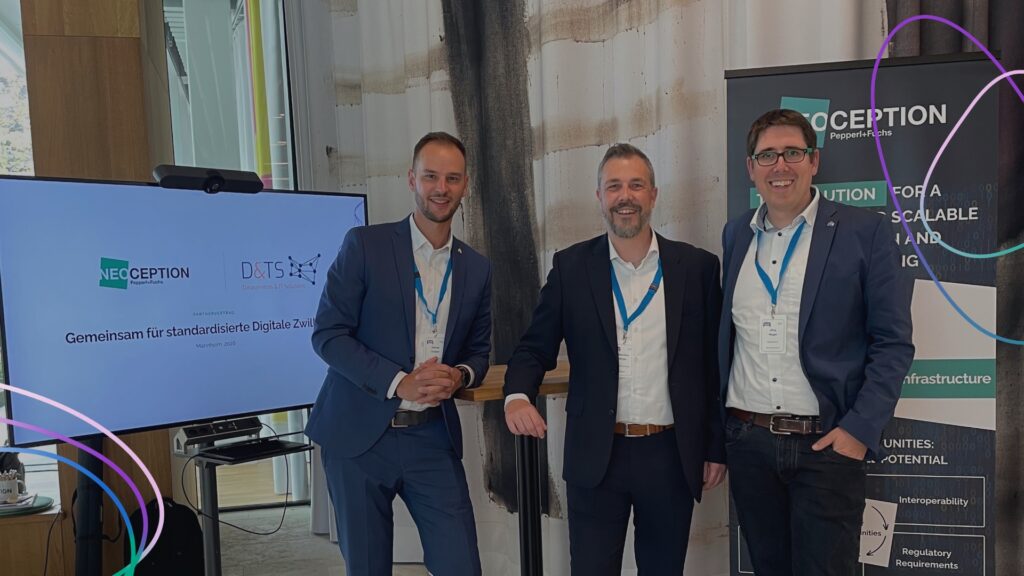
CUSTOMER PROJECTS ·
Bosch Connected World 2026: MHP and Neoception generate a Digital Twin for every cocktail, accessible via QR code. Implemented in three months.
MHP and Neoception showcase the Digital Material Passport live: every cocktail with its own twin.
Partner: MHP Management- und IT-Beratung GmbH · Implementation time: Approximately three months · Standard: Asset Administration Shell (AAS) according to DIN IEC 63278-1
By Dominik Schunke · 5 min read
Request Demo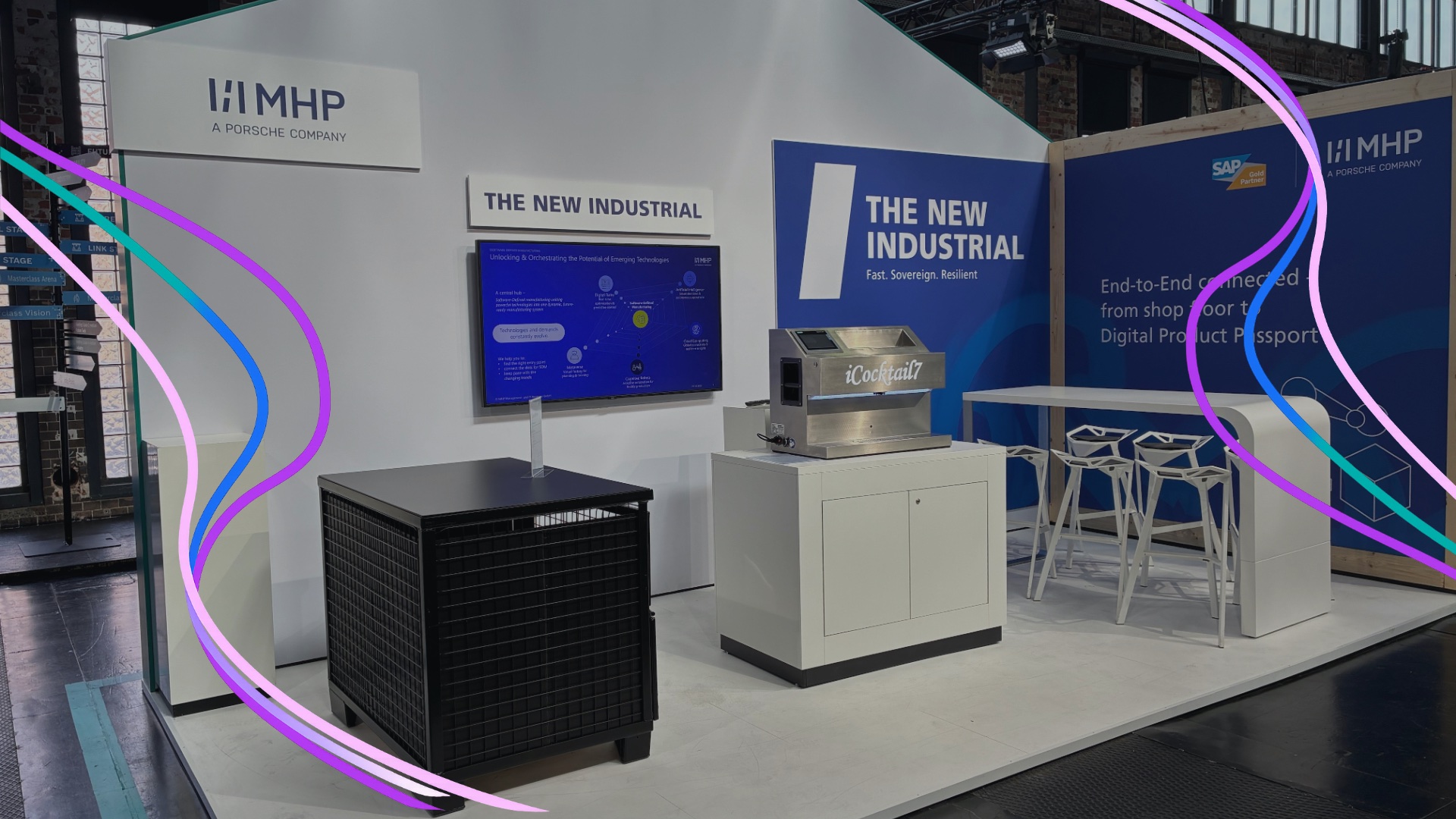
How do you demonstrate what a Digital Material Passport can achieve in three minutes? At Bosch Connected World 2026, MHP and Neoception did not build a slide deck, but rather a cocktail machine. Every mixed cocktail receives its own Digital Twin, accessible via a QR code.
At Bosch Connected World 2026, MHP and Neoception used a cocktail machine to generate real material passports as an implementation of a Digital Product Passport. Each individually mixed cocktail receives its own Digital Twin: complete with origin, recipe, carbon footprint, and lifecycle data, accessible via a QR code. One use case, three months of implementation, one proof: AAS-based Digital Twins are ready for use today.
Digital Product Passports are becoming a regulatory requirement, but the data required for them is currently mostly scattered across ERP, MES, and supplier systems. The real challenge is rarely the individual data source, but rather the end-to-end orchestration: How can data from production, logistics, and master data management be brought together into a single, trustworthy Digital Twin—live, role-based, and across the entire product lifecycle?
At the start of the project, this was also MHP's anticipated greatest hurdle: not individual data integration, but the seamless orchestration of the end-to-end scenario.
Instead of an abstract industrial example, MHP and Neoception used something everyone immediately understands: a cocktail. At the exhibition booth, guests order their custom cocktail via an interface, such as "Healthy" or "Powerful." In the background, a new instance is instantly created in Neoception AXON.
A QR code makes this Digital Twin visible to the guest: ingredient origins, recipe, sustainability metrics such as the carbon footprint, and real-time production status. The guest scans the code at the iCocktail7 mixing machine, which recognizes the individual recipe. Production begins, and the cocktail data updates live until the finished drink is served with a complete Digital Twin.
Integration was carried out via AI² as the central middleware between the participating systems and assets: plant, order, and requisition data converged here, while SAP Digital Manufacturing provided the required production data and acted as the central interface between the ordering system and manufacturing. On this basis, an ordering app automatically generated new AAS instances—the digital twins of the individual cocktails. These were orchestrated by Neoception AXON and continuously enriched along their entire lifecycle with additional data from AI²: from ordering to production and delivery.
Deployed Neoception AXON features: template-based modeling of the participating assets, automated generation of AAS instances based on these templates (triggered via the ordering app), API-based connection to AI², an Excel connector for master data, and QR code-based access to product information via the integrated viewer.
Within about three months, a complete end-to-end demonstrator was developed for Bosch Connected World. It provides a live, transparent demonstration that Digital Product Passports, traceability, and AAS-based Digital Twins are technically feasible across the entire product lifecycle—not as a vision of the future, but as a fully functional setup that visitors could operate themselves.
A particularly positive surprise was the straightforward scalability: new data sources could be integrated easily, allowing the scenario to be flexibly expanded without having to rebuild the architecture.
If you want to implement AAS-based digital twins quickly and in a structured manner, you will find a strong partner in Neoception.
Florian Lawitzki, Senior Consultant Industry Solutions, MHP
The collaboration with Neoception was characterized by a cooperative exchange, short alignment paths, and a shared understanding of AAS-based digital twin use cases.
Florian Lawitzki, Senior Consultant Industry Solutions, MHP
The smart cocktail demonstrator is a small, tangible example of a larger principle: Digital Product Passports cannot be forced by a single software solution. They emerge where integration expertise, such as that provided by MHP with AI², meets a scalable infrastructure for Digital Twins, as provided by Neoception with AXON and the Asset Administration Shell.
MORE POSTS
Further articles from partnerships, projects, events, and product updates.
Partnerships
Partnership agreement signed: D&TS prepares master data according to ECLASS, and Neoception AXON generates Asset Administration Shells from it.
To the article: D&TS and Neoception seal partnership
Events & Webinars
Eight manufacturers, two days in Mannheim, one finding: The technology works. The hurdle in the AAS rollout lies in the data and organization.
Read article: Community Days 2026: The hurdle lies in the data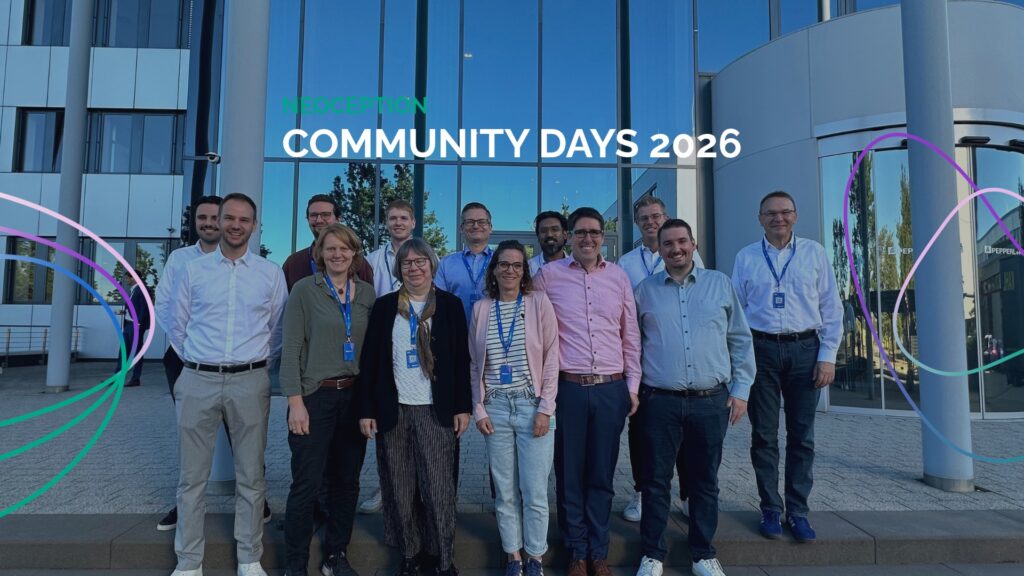
Events & Webinars
November 24 to 26, 2026, Nuremberg: Neoception AXON and the PCN Manager at the IDTA booth, Hall 5, Booth 358. Free ticket available through us.
To the article: Neoception AXON at SPS 2026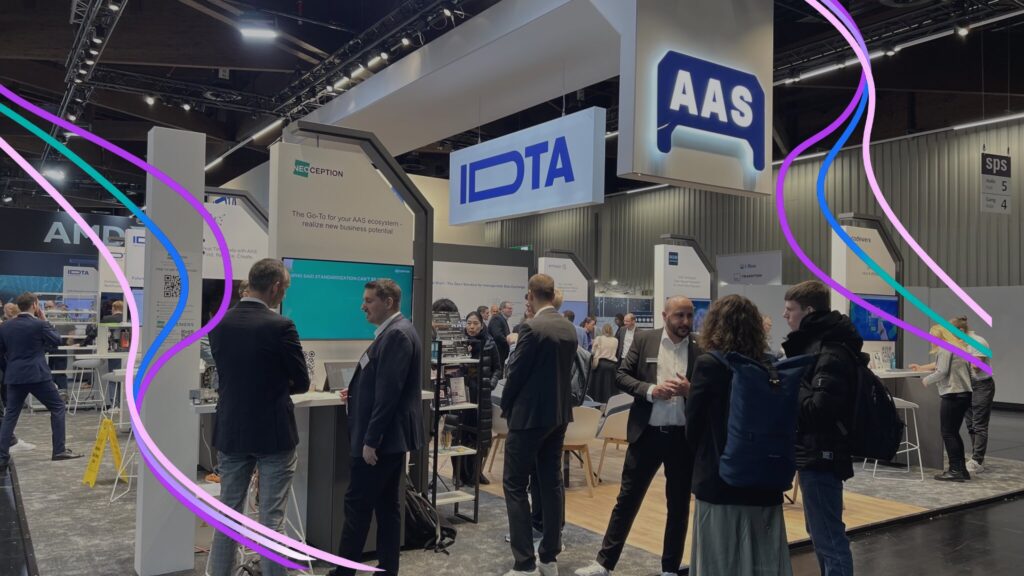

Would you like to implement your own Digital Product Passport or AAS use case quickly and practically? Talk to us.
Free and without obligation.
Briefly describe your request, and we will get back to you shortly.

FAQ
The key facts of this article, briefly answered.
View all FAQsA digital material passport is a type of digital product passport. It describes a single product’s origin, composition, sustainability metrics such as its carbon footprint, and lifecycle data. In the MHP and Neoception demonstrator, it is implemented as an Asset Administration Shell and can be accessed via a QR code.
Around three months from conception to the finished demonstrator for Bosch Connected World 2026, featuring four connected data sources and a seamless end-to-end scenario.
Template-based asset modeling, automated generation of AAS instances via an ordering app, API integration with the AI² middleware, an Excel connector for master data, and the integrated viewer for access via QR code.
You are currently viewing a placeholder content from Hubspot Embedded Content. To access the actual content, click the button below. Please note that doing so will share data with third-party providers.
More InformationYou are currently viewing a placeholder content from HubSpot. To access the actual content, click the button below. Please note that doing so will share data with third-party providers.
More InformationYou are currently viewing a placeholder content from Hubspot Meetings. To access the actual content, click the button below. Please note that doing so will share data with third-party providers.
More Information