Product Updates
AXON 1.2: What's New?
External submodel template repositories, Role-Based Access Control, advanced filtering, and multi-connector: all new features in AXON 1.2.
To the article: AXON 1.2: What's new?
PRODUCT UPDATES ·
One change notification, multiple engineering tools: The Event Feed reports product changes in a standards-compliant manner, while the PCN Manager generates them.
One change notice, many engineering tools: Event Feed and PCN Manager.
Event Feed: Notification channel in AXON, part of the core license starting with release 1.2 · PCN Manager: Companion app for creating and releasing notices · Standard: IDTA 02036-1-0, transmission in CloudEvents format
By Dominik Schunke · 9 min read
Request Demo
With the Event Manager, Neoception introduces Product Change Notifications to Neoception AXON. It consists of two parts with distinct roles: The Event Feed serves as the platform's messaging channel and is part of the AXON license. The PCN Manager is the new companion app where change notifications are created and approved for manufacturers without their own suitable PCN process.
Both follow the AAS standard rather than a bilateral agreement with an individual target system. That is precisely what this article is about.
A component manufacturer must inform every customer when a product changes or reaches end-of-life. In practice, this is done via PDF, email to known contacts, and phone calls. The information only reaches the customer's engineering system if someone manually enters it. Three characteristics make this approach unreliable:
The third characteristic is the most costly. The error is only noticed when an order is rejected or when a discontinued component has already been installed in new machines. Until then, the system behaves completely normally from the outside.
The Event Feed is the eventing channel of AXON. It complements request-based access to the Asset Administration Shell with a second pathway: the event channel reports that something has changed, while the AAS interface provides the data and remains the authoritative source. An event carries identifiers and the minimum details required for relevance decisions, but no payload data. The receiving system decides independently based on the notification whether to retrieve the corresponding AAS, thus never working with an outdated copy.
The feed is polled, not pushed. The receiving system queries at its own pace, keeps track of what it last processed, and resumes precisely from that point. A brief outage on either side therefore does not lead to data loss, but rather to a backlog that is subsequently processed in an orderly manner. The feed acts as a change notifier rather than an event store: events are retained for a declared period, and this period is visible on the feed itself.
This channel is included in the core license scope starting with release 1.2. Anyone using AXON has it.
The PCN Manager is the companion app for the preceding process. Many manufacturers lack a system in which a change notice is created, reviewed, and released. The PCN Manager accomplishes precisely that. A notice is entered manually, imported in batches, or transferred from a source system. The dataset follows the Product Change Notification submodel according to IDTA 02036-1-0 and includes notification type, manufacturer, affected article, classification, change description, lifecycle information, and the recommended successor product.
Before release, the PCN Manager checks whether the affected article is even retrievable. If it is not, release is denied. This check is intentionally placed on the sender side, because the recipient cannot enforce it and would not report an error.
Anyone already running an appropriate change process, such as in ERP, PLM, or a dedicated obsolescence tool, does not need the app. In this case, the existing system transfers the released notice via an interface, and the platform channel handles the rest. The process remains where it is today.
The obvious approach would be to replicate the process of a single target system. It is faster, and it is a dead end. With the second target system, the work starts all over again, and the manufacturer ultimately maintains multiple exports of the same information. The Event Manager is therefore structured differently:
For providers of engineering tools, ERP and procurement systems, portals, and catalog platforms, this means: Connection is an integration against a standards-compliant, self-describing feed, not an open-ended joint project. We explicitly welcome discussions with interested parties on this page.
To ensure that a change notification reaches the correct component, the receiving system needs a key that it can recognize in its own data. This key is the manufacturer article number, derived from the Digital Nameplate according to IDTA 02006-3-0.
Upon first contact with an article, the target system reads the Asset Administration Shell, extracts the manufacturer article number from the nameplate, cross-references it with its own article list, and stores the result as a permanent mapping. Every subsequent change notification attaches to this mapping.
This results in a requirement more critical than any feature: Identifiers must not be changed retroactively. If they change, the mapping on the receiving side breaks, and no one notices the error. The Event Manager is built to ensure this stability.
The first target system the Event Manager operates against is EPLAN. The manufacturer publishes its change notification, EPLAN retrieves it via the feed and makes it visible in the Data Portal so that the engineer receives the notice directly at the affected component and immediately sees where affected parts are installed.
EPLAN describes this use case itself on its page dedicated to Product Change Notifications and presented it in the press release "More Transparency in Engineering" as a solution based on the Asset Administration Shell.
For manufacturers evaluating this connection now, this is the concrete trigger. For us, it is one use case among several. What a manufacturer builds once—namely, clean master article data, a maintained Digital Nameplate, and stable identifiers—pays off for every subsequent engineering tool and portal added later.
At the launch of the PCN feature in EPLAN, we will be able to serve this use case—not as an announcement, but backed by manufacturers who are already live by then.
Starting with release 1.2, the notification channel is part of the core license scope. We supply the PCN Manager as a companion app to the extent required for reception via EPLAN.
And what about you? The raw material is already in-house: master article data, technical documentation, and the article numbers your customers already work with. It is not about creating something new, but about making existing data available in a way that a machine can reliably find it. The journey starts now, and those who begin now will be ready to connect sooner.
The Event Manager turns a product change notification into information that automatically reaches the correct component. The Event Feed reports it in a standards-compliant manner and is part of the platform; the PCN Manager generates and checks it for anyone who does not yet have a system for this, and the Asset Administration Shell provides the corresponding content. Today, EPLAN is the most prominent example of a receiver, not the framework into which the product fits.
The fastest path is our MVP package consisting of three building blocks:
Instead of a mere presentation, the result is a running pipeline containing your own article data, onto which additional source systems, entities, and use cases can subsequently be built.
MORE POSTS
Further articles from partnerships, projects, events, and product updates.
Product Updates
External submodel template repositories, Role-Based Access Control, advanced filtering, and multi-connector: all new features in AXON 1.2.
To the article: AXON 1.2: What's new?
Partnerships
Partnership agreement signed: D&TS prepares master data according to ECLASS, and Neoception AXON generates Asset Administration Shells from it.
To the article: D&TS and Neoception seal partnership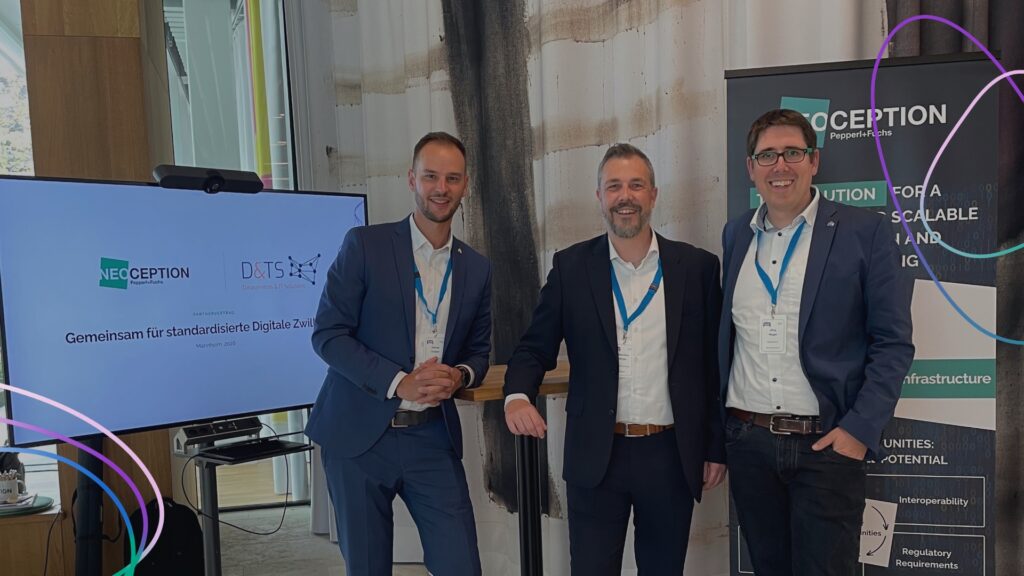
Events & Webinars
Eight manufacturers, two days in Mannheim, one finding: The technology works. The hurdle in the AAS rollout lies in the data and organization.
Read article: Community Days 2026: The hurdle lies in the data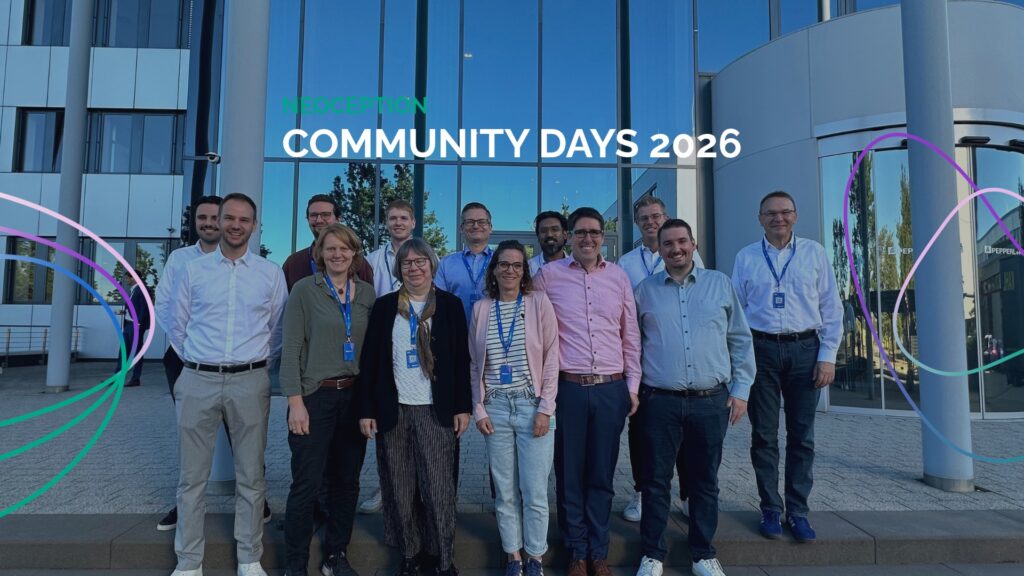

Get in touch with us. If you would like to speak with one of our reference customers beforehand, we will gladly establish the contact.
Free and without obligation.
Briefly describe your request, and we will get back to you shortly.


FAQ
The key facts of this article, briefly answered.
View all FAQsA structured notification from a manufacturer regarding a change to a product, such as a discontinuation, a successor product, corrected technical documentation, or an expiring certificate. As a submodel of the Asset Administration Shell, it is standardized in IDTA 02036-1-0.
No. The Event Manager publishes standard-compliant data via a self-describing feed. Additional recipients can connect to the same channel.
The receiving system resumes from the exact point where it left off and processes the backlog in an orderly manner. The feed retains events for a declared period that is indicated directly on the feed. It is not intended as a permanent archive.
The change notification itself, along with a well-maintained digital nameplate featuring the correct manufacturer article number. Using this value, the notification locates the component within the customer's data.
Only if you lack a system in which a change notification is created, verified, and approved. The reporting channel itself is a part of AXON. If you already manage your change process within an ERP, PLM, or a dedicated proprietary tool, you can pass the approved notification through via an interface.
No. The MVP is the first expansion stage of the later productive solution, not an experiment whose results are discarded afterward.
You are currently viewing a placeholder content from Hubspot Embedded Content. To access the actual content, click the button below. Please note that doing so will share data with third-party providers.
More InformationYou are currently viewing a placeholder content from HubSpot. To access the actual content, click the button below. Please note that doing so will share data with third-party providers.
More InformationYou are currently viewing a placeholder content from Hubspot Meetings. To access the actual content, click the button below. Please note that doing so will share data with third-party providers.
More Information